

Basil
Basil
No Salt, No Sugar, No Preservatives
Couldn't load pickup availability
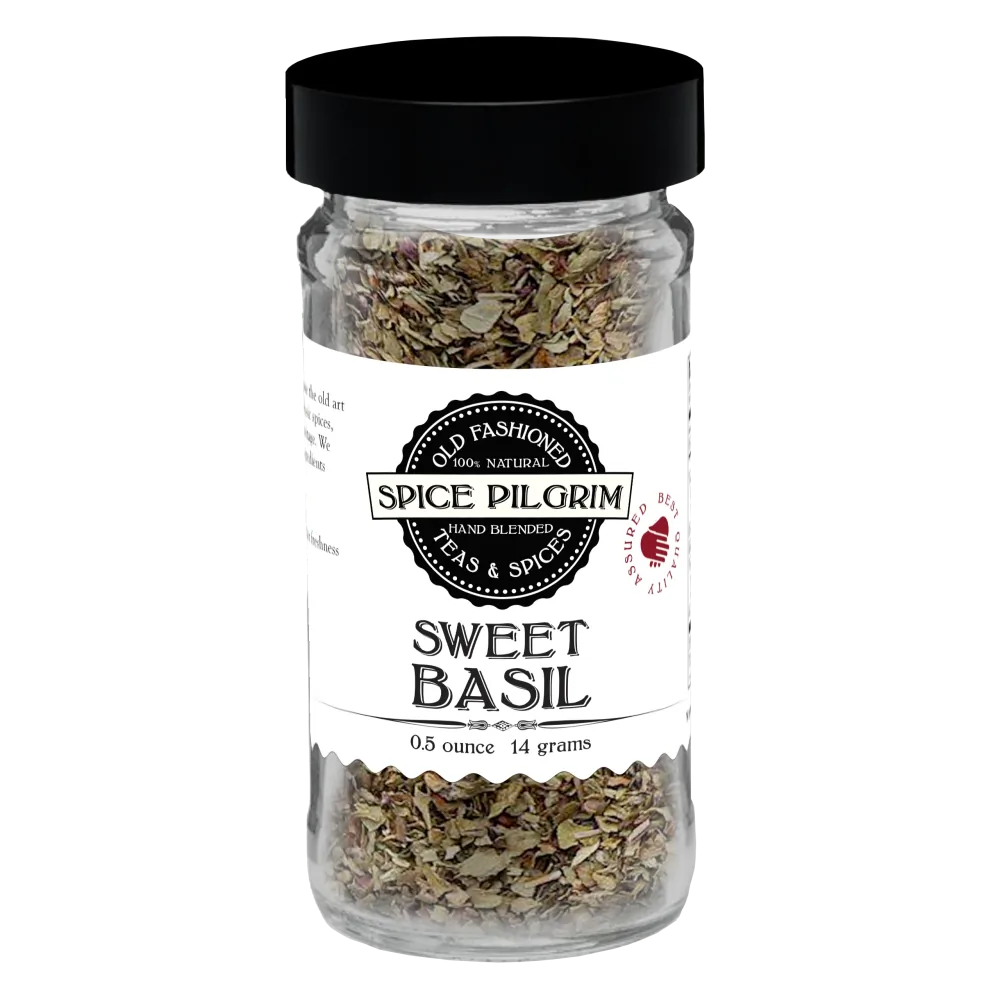
Reach for dried basil when a pot of tomato sauce, a simmering soup, or a tray of roasting vegetables needs that warm, sweet, unmistakably Italian backbone. Dried basil is built for cooked dishes: stirred in early, it has time to soften and bloom, releasing a deep, concentrated, herbaceous warmth into the sauce. Add it to marinara and ragu, sprinkle it into a no-knead bread dough, fold it into a tomato-and-garlic oil, or rub it onto chicken before roasting.
The trick most people miss is that dried basil is a different tool than fresh, not a lesser version of it. Fresh leaves are for finishing, scattered raw over a pizza or a caprese; dried basil is for building, where slow heat draws out flavors that fresh cannot give a long-simmered dish. We dry and cut ours and pack it fresh, because basil's sweet aroma lives in delicate oils that fade fast once the leaf sits too long on a shelf.
Dried cut leaf, packed fresh. No salt, sugar, or fillers.
Common Questions
Can I use dried basil instead of fresh?
Can I use dried basil instead of fresh?
In cooked dishes, yes, and often it is the better choice. The general rule is about one teaspoon dried for one tablespoon of fresh, since drying concentrates the flavor. The one place to avoid the swap is raw preparations like pesto or a caprese salad, where fresh leaves are doing a different job.
Why did my dried basil taste like nothing?
Why did my dried basil taste like nothing?
Almost always because it was old, or because it was added too late. Basil's flavor is carried in volatile oils that fade on the shelf, so a jar that has sat for a year tastes flat. Add it early in cooking, not at the end, and give it liquid and time to rehydrate and open up.
What is the best way to bring out its flavor?
What is the best way to bring out its flavor?
Bloom it. Stir the dried leaf into warm olive oil or butter for a moment before adding tomatoes or stock, or add it at the start of a simmer. The fat and gentle heat wake up the oils and carry the flavor through the whole dish. Crushing a pinch between your fingers as you add it helps too.
What does it pair well with?
What does it pair well with?
It is the classic partner to tomato in any form, and it loves garlic, olive oil, oregano, and other Mediterranean herbs. Beyond Italian cooking it works on roasted vegetables, in bean dishes, baked into savory breads, and rubbed onto poultry.
Can I make tea with it?
Can I make tea with it?
You can. A spoonful of dried basil steeped in hot water makes a mild, fragrant, slightly sweet cup. Keep it covered while it steeps, since the same aromatic oils that flavor your cooking will otherwise drift off in the steam.
Share
Ingredients:

Basil
$12.00