

Bay Leaves
Bay Leaves
No Salt, No Sugar, No Preservatives
Couldn't load pickup availability
Drop one into the pot at the start of a long simmer and it does the quiet work most cooks never notice until it is missing: a bay leaf rounds out a stew, a pot of beans, a tomato sauce, or a braise, pulling the sharp edges together into something that tastes finished. It works underneath the dish rather than on top of it, the low note that lemon is the high note to. Pull it out before serving, and what stays behind is depth you cannot quite name.
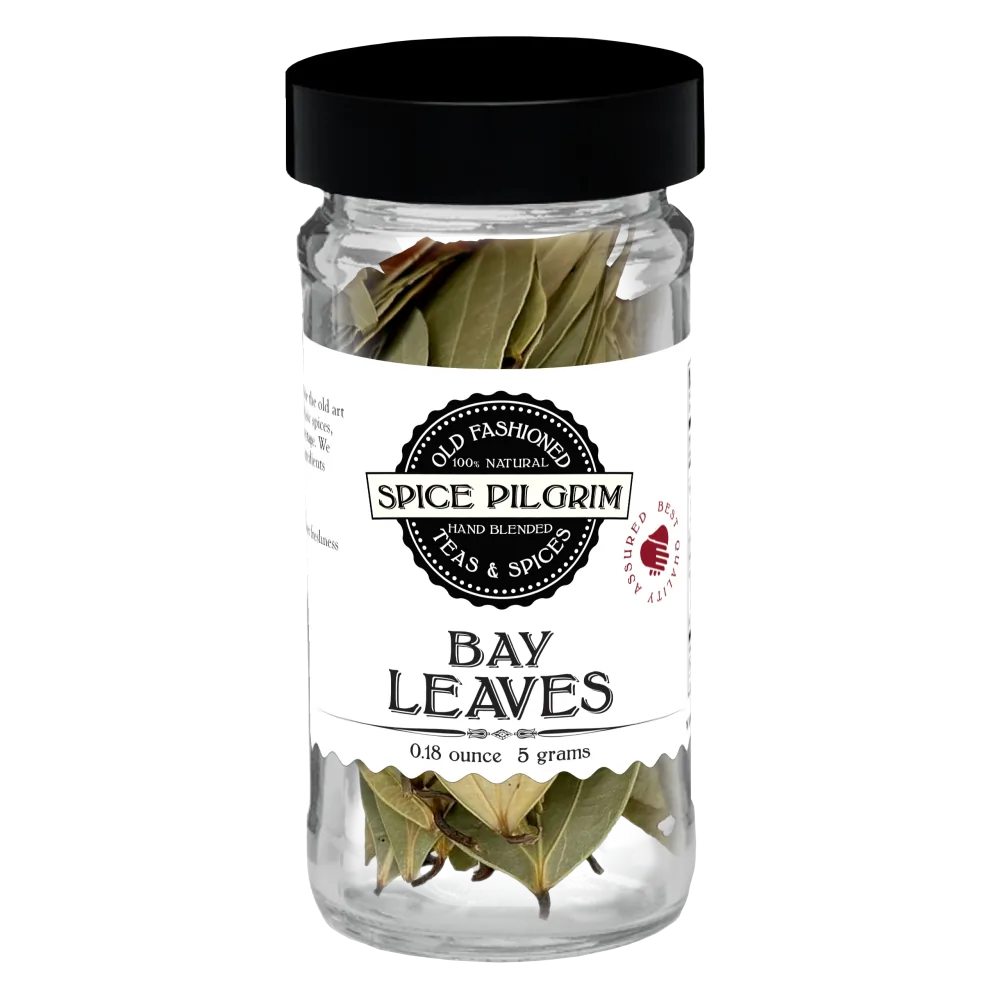
That quiet quality is exactly why so many people wonder whether bay does anything at all, and almost always the answer is the leaf, not the herb: a jar that has sat in the back of a cupboard for years has lost the fragrant oils that carry the flavor. These are whole bay leaves, the mild, sweet, tea-like variety that classic European and Mediterranean kitchens have leaned on for centuries, kept whole so the aroma stays sealed in the leaf until you reach for it.
Whole leaves, packed fresh. No salt, sugar, or fillers.
Common Questions
Do bay leaves actually do anything?
Do bay leaves actually do anything?
Yes, though the effect is subtle by design. Bay adds a warm, faintly clove-and-tea-like backnote that grounds slow-cooked dishes, the kind of thing you notice most when it is absent. The reason so many people think bay does nothing is almost always a stale leaf: the flavor lives in volatile oils that fade after a year or two in the cupboard, so an old jar really does taste like paper. A fresh, fragrant leaf is a different experience.
How do I get the most flavor out of it?
How do I get the most flavor out of it?
Add the whole leaf early, to a dish with some liquid and fat, and give it time. Bay's flavor compounds are fat-soluble and release slowly, so a long simmer in a stew, sauce, stock, or braise is where it shines. Steeped in plain water alone it tastes thin; it wants a rich pot and at least thirty minutes to open up.
Is it safe to eat a whole bay leaf?
Is it safe to eat a whole bay leaf?
Always remove whole leaves before serving. They stay stiff and do not soften even after hours of cooking, so a swallowed leaf or sharp piece can scratch or catch in the throat. They are there to flavor the pot, not to be eaten. Counting your leaves in and back out is the easy habit.
How do I know if my bay leaves are still good?
How do I know if my bay leaves are still good?
Crush one and smell it. A good leaf releases a clear, warm, herbal aroma right away; if you get almost nothing, the oils have faded and it is past its prime. Stored whole in a sealed jar away from light and heat, fresh leaves hold their fragrance far longer than the pre-crushed kind.
Can I use bay leaves for tea?
Can I use bay leaves for tea?
You can. A single fresh leaf steeped in hot water makes a mild, clean, comforting cup with a gentle herbal warmth. Use just one and steep it briefly, since bay is potent and a heavy hand turns it sharp.
Share
Ingredients:

Bay Leaves
$12.00