


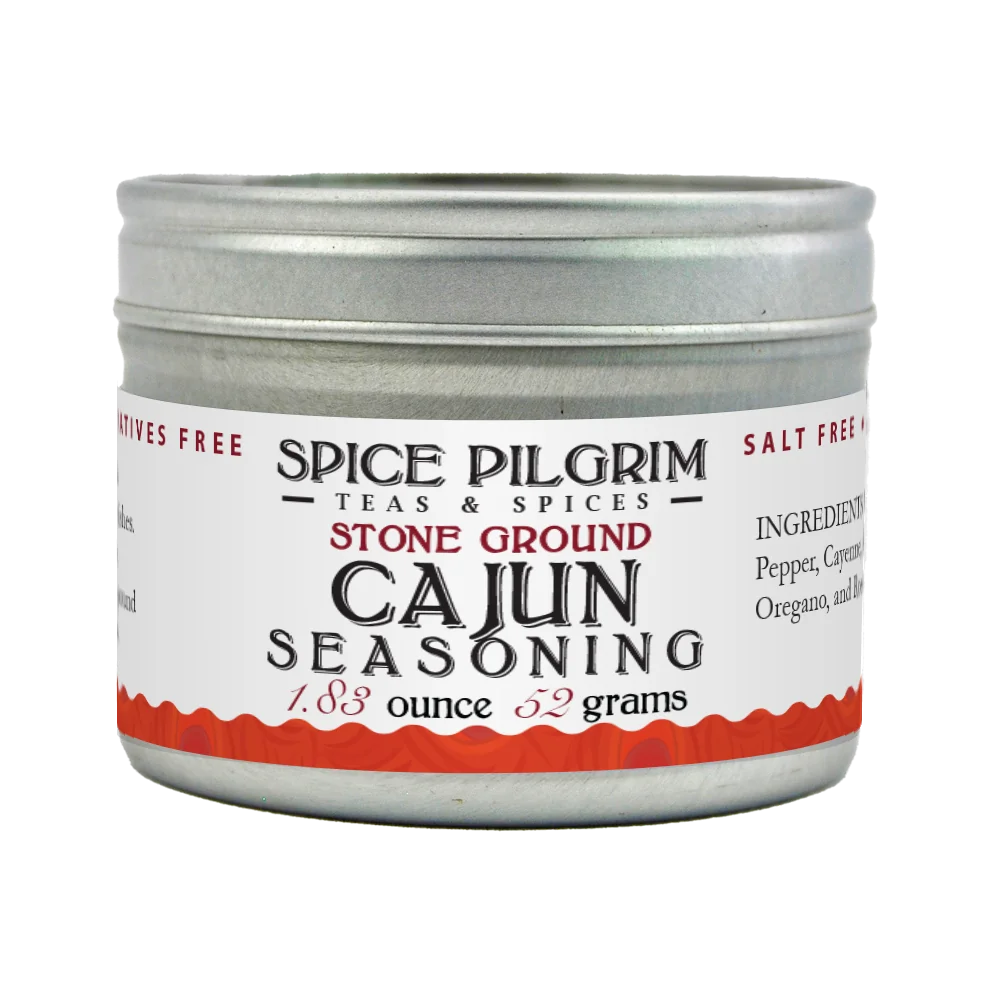
Stone Ground
Cajun Seasoning
Cajun Seasoning
No Salt, No Sugar, No Preservatives
Couldn't load pickup availability
Reach for this Cajun blend when you want to put deep, savory Louisiana flavor on just about anything. It is the all-purpose seasoning cooks end up shaking on everything: stirred into gumbo and jambalaya, tossed with pasta in a cream sauce, dusted over fries and popcorn, rubbed on chicken wings, or sprinkled across scrambled eggs and roasted vegetables. Paprika, garlic, and onion build the savory base, with thyme, oregano, and rosemary for herbal depth and cayenne and red pepper flakes for a warm, adjustable kick.
The difference you notice first is what is missing: salt. Most supermarket Cajun blends are salt first, so seasoning a dish heavily enough to taste the herbs and pepper also over-salts it. Built salt-free, this one lets you be as heavy-handed as the flavor calls for and salt to your own taste separately. We stone-grind it fresh and keep it rustic, with visible herb leaves and pepper flakes that cling to food instead of dissolving into a film.
Stone-ground, salt-free, packed fresh. No salt, sugar, or fillers.
Common Questions
How do I use it, and how much?
How do I use it, and how much?
Treat it as your everyday savory all-rounder. Stir it into the roux and stock for gumbo, coat meats and rice for jambalaya, whisk it into a cream sauce for Cajun pasta, or use it as a dry rub for chicken and shrimp. Because it is salt-free, you can apply it generously without fear, then salt the finished dish to taste.
Does Cajun seasoning have to be spicy?
Does Cajun seasoning have to be spicy?
No, and this is a common misconception. Authentic Cajun cooking is heavily seasoned and aromatic, not necessarily fiery. The heat here comes from cayenne and red pepper flakes, so you control it: use a lighter hand for a mild, savory, herb-forward result, or lean in for more kick. The garlic, onion, paprika, and herbs carry the flavor either way.
What is the difference between this and a blackening seasoning?
What is the difference between this and a blackening seasoning?
Cajun seasoning is the everyday, all-purpose blend you cook with and shake on freely. Blackening is a high-heat technique: you dip food in butter, coat it, and sear it hard in a screaming-hot pan so the spices char into a dark crust. This blend is built to season broadly; for a true blackened crust, the method matters as much as the mix.
What is the difference between Cajun and Creole?
What is the difference between Cajun and Creole?
Roughly, Cajun is the rustic country style from the Louisiana bayous, built on pepper, garlic, onion, and herbs, while Creole is the more cosmopolitan New Orleans style that often adds tomatoes and a wider spice range. This blend leans into the herbal, aromatic side with thyme, oregano, and rosemary, so it bridges the two and works across both styles of cooking.
I made my dish too salty with another brand. Does a potato fix it?
I made my dish too salty with another brand. Does a potato fix it?
The "throw in a raw potato" trick is a myth, a potato absorbs liquid but does not pull salt out. The real fix is dilution: add more unsalted stock, rice, or vegetables to spread the salt across more food. Better yet, season with a salt-free blend like this one and add salt yourself, so it never gets away from you.
Share

Ingredients:

Cajun Seasoning
$12.00
This has a great flavor, not overly spicy just the perfect amount of heat. We love to marinate jumbo scrimp over night in a bag like the old shake and bake. Throw them on a hot grill and It makes the best Cajun shrimp po boy sandwiches ever. You can also add this seasoning into mayo and it really spices up a turkey sandwich.