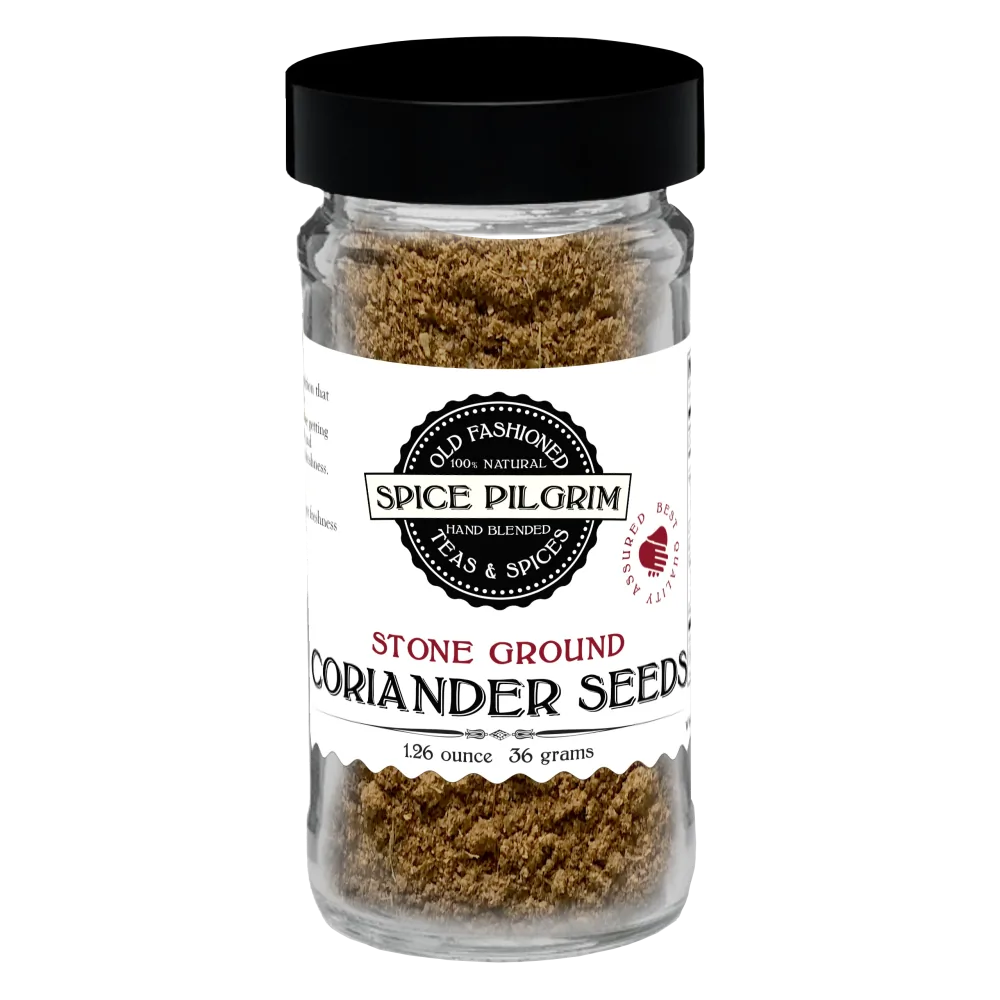
Stone Ground
Coriander Seeds - Ground
Coriander Seeds - Ground
No Salt, No Sugar, No Preservatives
Couldn't load pickup availability
The warm, sweet, citrusy backbone of curry powder and garam masala, ready to stir straight into the pan: ground coriander is the convenient form of one of the world's great base spices, and freshness is the whole story. Pre-ground coriander is one of the spices that goes flat fastest on a shelf, so we stone-grind ours fresh in small batches, which is the difference between a soft, sweet, lemony warmth and the dusty, papery nothing of an old jar. Stir it into curries, dals, soups, and stews, work it into spice rubs and marinades, or blend it into batters, breads, and roasted-vegetable seasonings.
Ground coriander dissolves and spreads its flavor immediately, so it folds smoothly into quick-cooking and high-heat dishes where whole seeds would be out of place. We stone-grind the whole seeds cold to keep the fragrant oils intact, so the powder smells alive when you open it. If you would rather toast and grind your own for the longest shelf life, our coriander also comes as whole seeds.
Stone-ground, packed fresh. No salt, sugar, or fillers.
Common Questions
What does ground coriander taste like?
What does ground coriander taste like?
Warm, sweet, and gently citrusy, with a soft floral, almost lemony note. It is mild and rounding rather than sharp or hot, which is exactly why it is used as a base spice that harmonizes bolder flavors in a blend. It is a natural partner to cumin and to ginger.
Why does freshness matter so much for ground coriander?
Why does freshness matter so much for ground coriander?
Because its flavor lives in volatile oils that escape quickly once the seed is ground and exposed to air. Coriander is one of the spices that fades fastest in powdered form, which is why a long-sitting supermarket jar often tastes of almost nothing. Stone-grinding it fresh, and keeping the jar sealed and cool, is what preserves the sweet, citrusy character.
When should I use ground instead of whole seeds?
When should I use ground instead of whole seeds?
Reach for ground when you want coriander's flavor to release immediately and blend in smoothly: curries, dals, batters, spice rubs, dressings, and quick or high-heat dishes. Whole seeds are better when you want to toast and grind to order, or for pickling brines and long braises. This ground version skips the toasting and grinding step for you.
Is this the same as cilantro?
Is this the same as cilantro?
Same plant, different part. This is the ground dried seed (coriander); the fresh leaves of the same plant are cilantro. They taste nothing alike: the seed is warm, sweet, and nutty, the leaf bright and grassy-citrusy. So ground coriander will not give a dish the fresh, green cilantro note, and vice versa.
What dishes rely on it?
What dishes rely on it?
It is everywhere: the sweet base of Indian garam masala and curry powders, a partner to cumin in Middle Eastern and North African blends, and a seasoning for roasted vegetables, sausages, soups, and braised meats. Because it is already ground, it is the easy choice for weeknight curries and quick rubs.
Share