

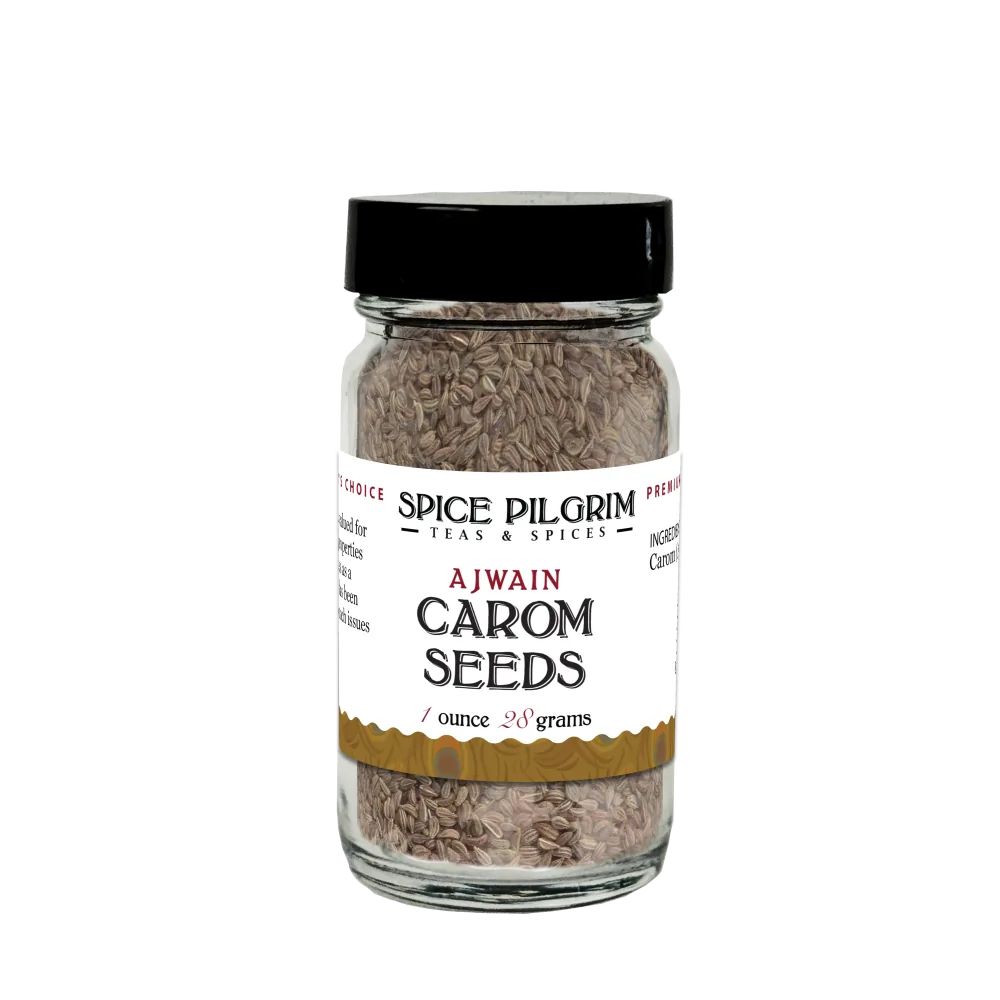
Ajwain, aka Carom Seeds
Ajwain, aka Carom Seeds
No Salt, No Sugar, No Preservatives
Couldn't load pickup availability
If you know thyme, you already have a feel for ajwain: think of it as thyme's sharper, bolder cousin, with a hint of cooling menthol. These tiny seeds, also called carom, bring a savory, herby punch that cuts cleanly through rich and fried food. Reach for them on roasted potatoes and root vegetables, worked into savory breads, crackers, and flatbread dough, or stirred into a cheese or tomato sauce that wants a little lift. A pinch goes a long way.
In Indian kitchens, where these seeds have been used for generations, ajwain is a tempering spice: fried for a few seconds in hot oil or ghee to wake up its aromatic oils, then carried into lentils, fritter batters, and flatbreads. It is also the seed traditionally kept by the door for a pinch chewed after a heavy meal. We pack whole seeds fresh, because ajwain's punch lives in volatile oils that fade once the seed sits too long.
Whole seeds, packed fresh. No salt, sugar, or fillers.
Common Questions
I've never cooked with ajwain. Where do I start?
I've never cooked with ajwain. Where do I start?
Treat it like a stronger thyme. Crush a small pinch between your fingers and add it to roasted potatoes, a savory quick bread or cracker dough, or a pan of sauteed vegetables. Because it is potent, start with less than you think, taste, and build up. Used in small amounts, it adds a warm, herby, almost savory note.
How do I use it so it does not taste harsh?
How do I use it so it does not taste harsh?
This is the one thing to know: ajwain is sharply bitter and almost medicinal raw, but heat fixes that. Bloom it in hot oil or ghee for ten to fifteen seconds, or bake it into dough, and the bitterness turns warm and savory. Never eat it raw by the spoonful, and never use a heavy hand.
What is it traditionally used in?
What is it traditionally used in?
In Indian cooking it shines in chickpea-flour batters for fritters like pakoras and samosas, kneaded into flatbread doughs like paratha and puri, and tempered into lentil dishes (dal) and high-fiber vegetables like cauliflower and cabbage. If you cook those dishes, this is a pantry essential.
Can I use it instead of thyme or oregano?
Can I use it instead of thyme or oregano?
Yes, as a bolder substitute. It brings a similar herby, savory quality but stronger and with a touch of heat, so use a little less than the thyme or oregano a recipe calls for.
Is ajwain the same as caraway or lovage?
Is ajwain the same as caraway or lovage?
No, though jars are often mislabeled this way. Caraway is sweet and aniseed-like, lovage is celery-like, and ajwain is sharp and thyme-hot. They are not interchangeable. (There is also a custom in many South Asian households of chewing a pinch after a heavy meal, mentioned here as tradition, not advice.)
Share
Ingredients:

Ajwain, aka Carom Seeds
$12.00