

Celery Seeds
Celery Seeds
Couldn't load pickup availability
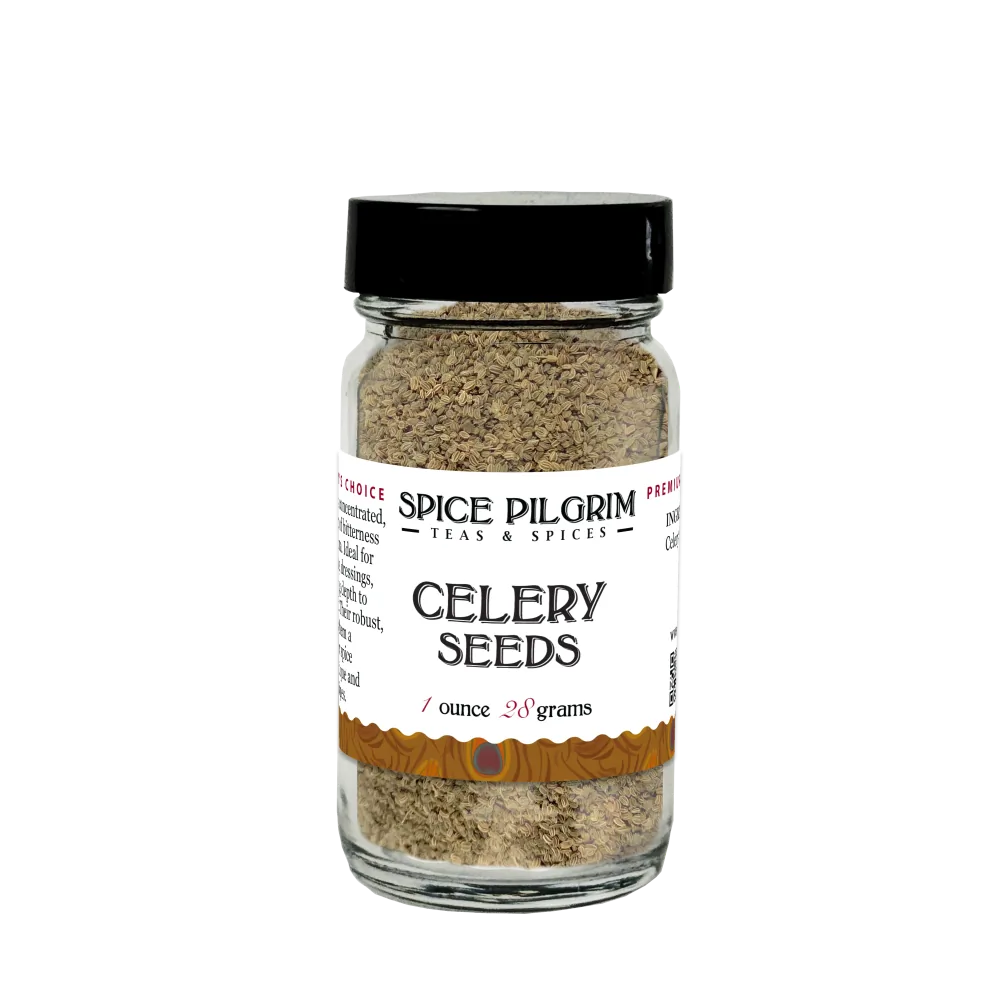
Reach for celery seed when a soup, a pot of stock, or a bowl of coleslaw needs that clean, green, savory celery note without buying a whole bunch that half-rots in the drawer. These tiny seeds carry a concentrated, slightly grassy warmth, the backbone flavor of tuna and potato salad, deli slaws, and bread-and-butter pickles, and the quiet depth in a long-simmered broth. A small pinch does the work of a whole stalk, with no stringy texture to fish out.
It is the low-waste way to keep celery flavor on hand: dry, shelf-stable, and ready whenever a recipe wants that aromatic lift. We pack whole seeds fresh, because celery seed turns harsh and camphor-like once it is old, and the whole seed holds its clean flavor far longer than a tired jar at the back of the cupboard.
Whole seeds, packed fresh. No salt, sugar, or fillers.
Common Questions
What is the difference between celery seed and celery salt?
What is the difference between celery seed and celery salt?
Celery seed is pure seed, nothing added. Celery salt is mostly table salt with a little ground celery seed mixed in. The advantage of buying the seed is control: you add the celery flavor and salt your dish separately, instead of being forced to over-salt just to get more celery taste.
How do I substitute it for fresh celery?
How do I substitute it for fresh celery?
A small pinch, about an eighth to a quarter teaspoon, stands in for one fresh stalk in soups, stocks, and stews. Lightly crush the seeds first to release their oils. It gives you the aromatic celery note without the water or the stringy texture, which is why it is so useful in long-simmered dishes.
Why do my celery seeds taste bitter?
Why do my celery seeds taste bitter?
Almost always too many, or too old. Celery seed is potent, and a heavy hand turns it sharp and camphor-like. This bites hardest in cold mayo-based salads, where the flavor keeps infusing overnight: a teaspoon that tasted fine at lunch can be bitter by the next day. Start with a small pinch and let it bloom rather than dumping it in.
What do people actually use it in?
What do people actually use it in?
Classic uses: coleslaw, potato and macaroni salad, tuna, chicken, and egg salad, and bread-and-butter pickles, where it is the defining flavor. It also rounds out soups, stocks, turkey stuffing, and dry rubs, and it is the savory note on a Chicago hot dog and the rim of a Bloody Mary or Caesar.
Whole seeds or should I grind them?
Whole seeds or should I grind them?
Both work. Whole seeds are right for pickling brines, slaws, and long-cooked dishes where they soften. Grind or crush them for dressings, rubs, and anywhere you want the flavor to spread evenly and fast. Grinding right before use gives the strongest aroma.
Share
Ingredients:

Celery Seeds
$12.00