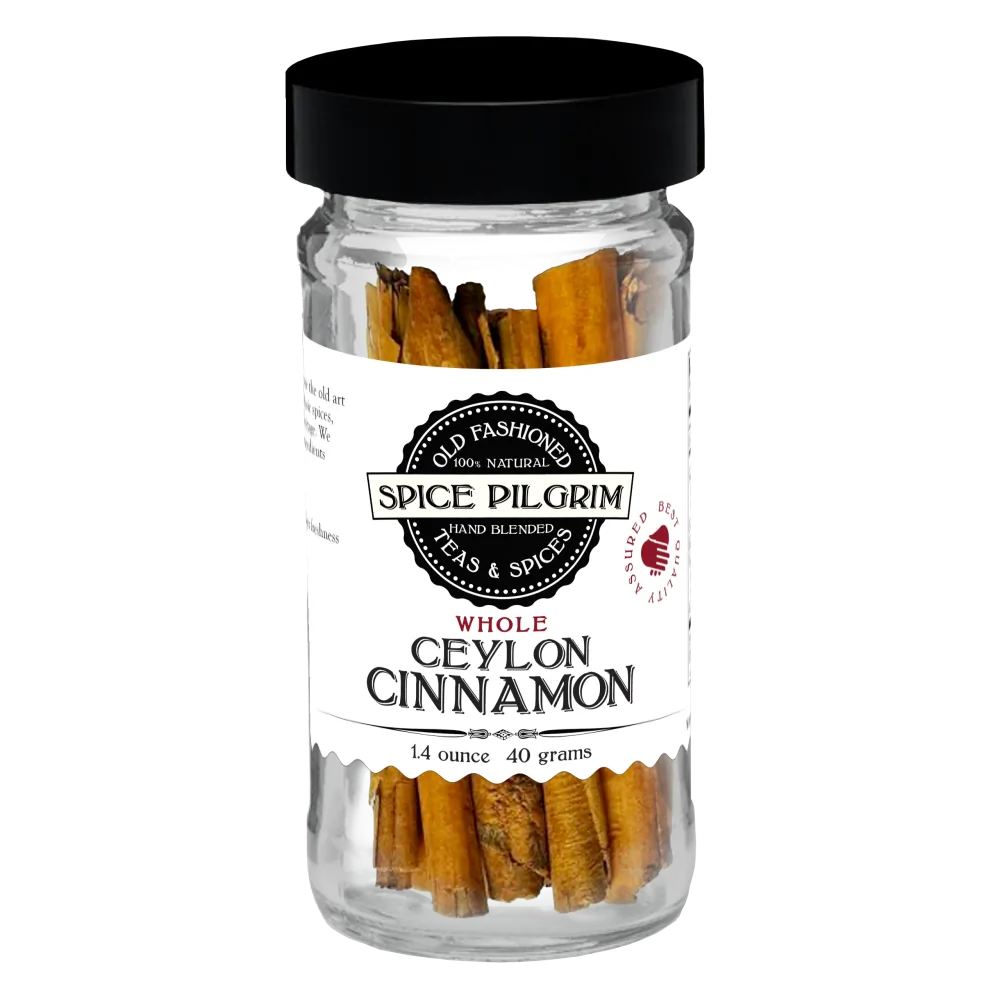
Ceylon Cinnamon Sticks
Ceylon Cinnamon Sticks
No Salt, No Sugar, No Preservatives
Couldn't load pickup availability
Reach for Ceylon cinnamon sticks when you want true cinnamon, the delicate, sweet, citrus-and-honey kind, dropped whole into tea, coffee, mulled cider, rice pudding, or a slow-cooked curry. Also called canela in Mexican kitchens, these are thin quills of true cinnamon, prized because they perfume a pot gently instead of hitting it with the harsh, candy-hot bite of common grocery-store cinnamon. Simmer one in milk for arroz con leche, steep a half-stick in your cup, or add one to birria and barbacoa for a warm background note.
Ceylon is a different tree from the common cassia behind most grocery-store cinnamon, and you taste the difference: softer, sweeter, more floral, where cassia is bold and hot. Many Ceylon quills are also rolled from thin, papery layers, lighter and more delicate than a hard cassia curl, though thickness varies. It is the variety Mexican and Sri Lankan cooks reach for. We pack whole sticks fresh so the delicate oils stay sealed until you steep or grind them.
Whole sticks, packed fresh. No salt, sugar, or fillers.
Common Questions
How do I tell Ceylon from the common cassia in stores?
How do I tell Ceylon from the common cassia in stores?
Flavor is the surest signal: Ceylon is delicate, sweet, and citrus-floral, while cassia is bold, hot, and pungent. Appearance is a helpful hint but not a hard rule. Ceylon often shows many thin, papery layers and a lighter tan color, where cassia tends to be a thicker, harder, reddish curl, but quill thickness varies, so a sturdier roll is not a sign of a fake. When in doubt, trust the taste and the source.
Why does my Ceylon taste milder than regular cinnamon?
Why does my Ceylon taste milder than regular cinnamon?
Because it is supposed to. True Ceylon is delicate, sweet, and citrus-floral, where cassia is bold, hot, and pungent, the aggressive flavor most people grew up with. If your Ceylon tastes subtle, that is the real spice, not a weak one. In recipes built around cassia's punch, you may want to use a little more, or pair it with other warm spices.
How do I grind Ceylon sticks at home?
How do I grind Ceylon sticks at home?
Gently, and not in a cheap grinder. The papery quills can jam blade and burr grinders that handle hard cassia fine. Better to snap them by hand, crush them in a bag with a rolling pin, or toast them briefly first to make them brittle, then grind in short bursts and sift. Or skip grinding and just steep them whole.
How do I use them in tea without it turning bitter?
How do I use them in tea without it turning bitter?
Simmer gently, do not hard-boil for a long time. One or two sticks in hot water for eight to ten minutes makes a warm, naturally sweet cup, and the water actually sweetens the longer it sits, so you may not need sugar. Boiling them hard for too long pulls out tannins and turns the cup bitter and astringent. The sticks can be rinsed, dried, and reused once or twice.
Is it the same as the canela in Mexican recipes?
Is it the same as the canela in Mexican recipes?
Yes. Canela is Ceylon cinnamon, and Mexico is its largest market. Its soft, sweet, woody-citrus profile is what authentic birria, barbacoa, cajeta, horchata, and cafe de olla are built on, where harsh cassia would overwhelm the dish. If a Mexican recipe calls for canela, this is what it means.
Share