


Stone Ground
Blackened Seasoning
Blackened Seasoning
No Salt, No Sugar, No Preservatives
Couldn't load pickup availability
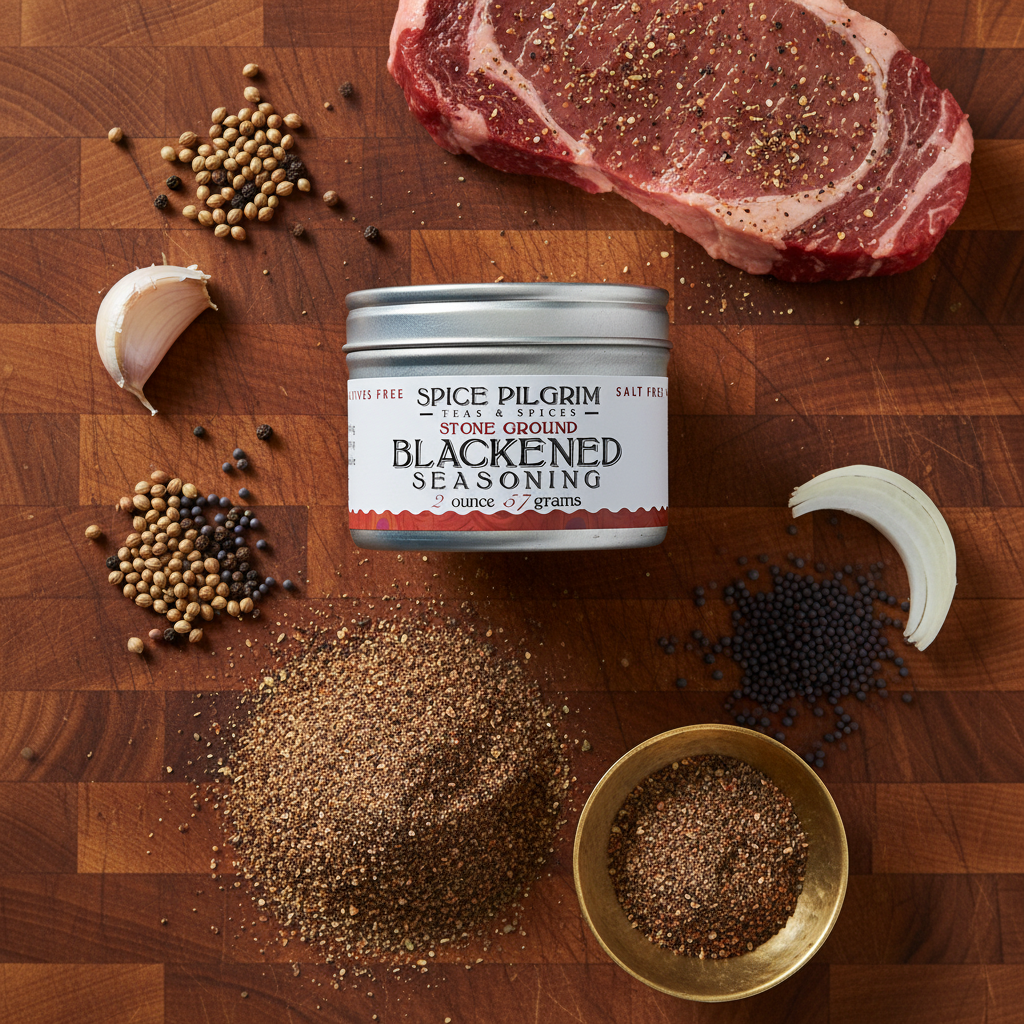
Reach for blackened seasoning when you want that dark, peppery, restaurant-style crust on a fillet of fish, a chicken breast, or a steak. This is the bold Louisiana blend made famous on blackened redfish: black pepper forward, with paprika, onion, garlic, and a backbone of celery, mustard, and coriander seed. You coat the food heavily, sear it hard, and the spices char into a deep, savory crust that seals the juices in. It works just as well on shrimp, pork chops, roasted vegetables, and tofu.
The thing that sets this apart is what is not in it: salt. Most blackening blends are salt-first, so the heavy coating a real crust needs leaves the dish too salty to eat. Built salt-free, this one lets you lay the seasoning on thick for a proper crust and salt to your own taste separately. We stone-grind it fresh in small batches so the pepper and seeds stay aromatic.
Stone-ground, salt-free, packed fresh. No salt, sugar, or fillers.
Common Questions
How do I get a proper blackened crust?
How do I get a proper blackened crust?
Pat the food dry, dip it in melted butter, then coat it heavily on all sides with the seasoning. Lay it in a dry, very hot pan, ideally cast iron, with no oil in the pan itself. Let it sit undisturbed long enough to char, then flip once. The butter and spices caramelize into the signature dark crust.
How do I avoid setting off the smoke alarm?
How do I avoid setting off the smoke alarm?
Blackening makes real smoke, that is the method. The easiest fix is to take it outside: set your cast-iron pan on a grill, or use a flat-top or burner outdoors. Indoors, run the exhaust fan on high, crack a window, or sear the protein after bringing it most of the way to temperature in the oven so the hard sear is quick.
Why does my blackened food taste bitter or burnt?
Why does my blackened food taste bitter or burnt?
Usually scorched fat, not scorched spice. Raw butter solids and low-smoke-point oils like olive oil burn instantly on a screaming-hot pan and turn acrid. Dip the food in butter as a coating, but keep the pan itself dry, or use a high-smoke-point fat like avocado oil or clarified butter if you prefer to grease the pan.
What is the difference between blackened, Cajun, and Creole?
What is the difference between blackened, Cajun, and Creole?
Blackened is a cooking method, the butter-dip-and-hard-sear that chars a spice crust, not just a spice mix. Cajun seasoning is the rustic, peppery country style; Creole leans more herbal and refined. This blend bridges them: bold pepper and pungency with bright celery and coriander, built to blacken.
Since it is salt-free, how do I season properly?
Since it is salt-free, how do I season properly?
Coat generously, the way the crust needs, then add salt separately to taste, either in the butter dip or at the table. That two-step approach is the whole advantage: full crust, full flavor, and you control the salt instead of the jar controlling it.
Share

Ingredients:

Blackened Seasoning
$12.00
Another favorite blend, so versatile and robust. Highly recommend this seasoning as it goes well with everything!
Wow. This stuff is really great. Put it on anything and I mean anything, and it will turn out great. Just the right amount of heat We have used this on chicken, fish, hamburgers and eggs. So, enjoy, we sure do.