

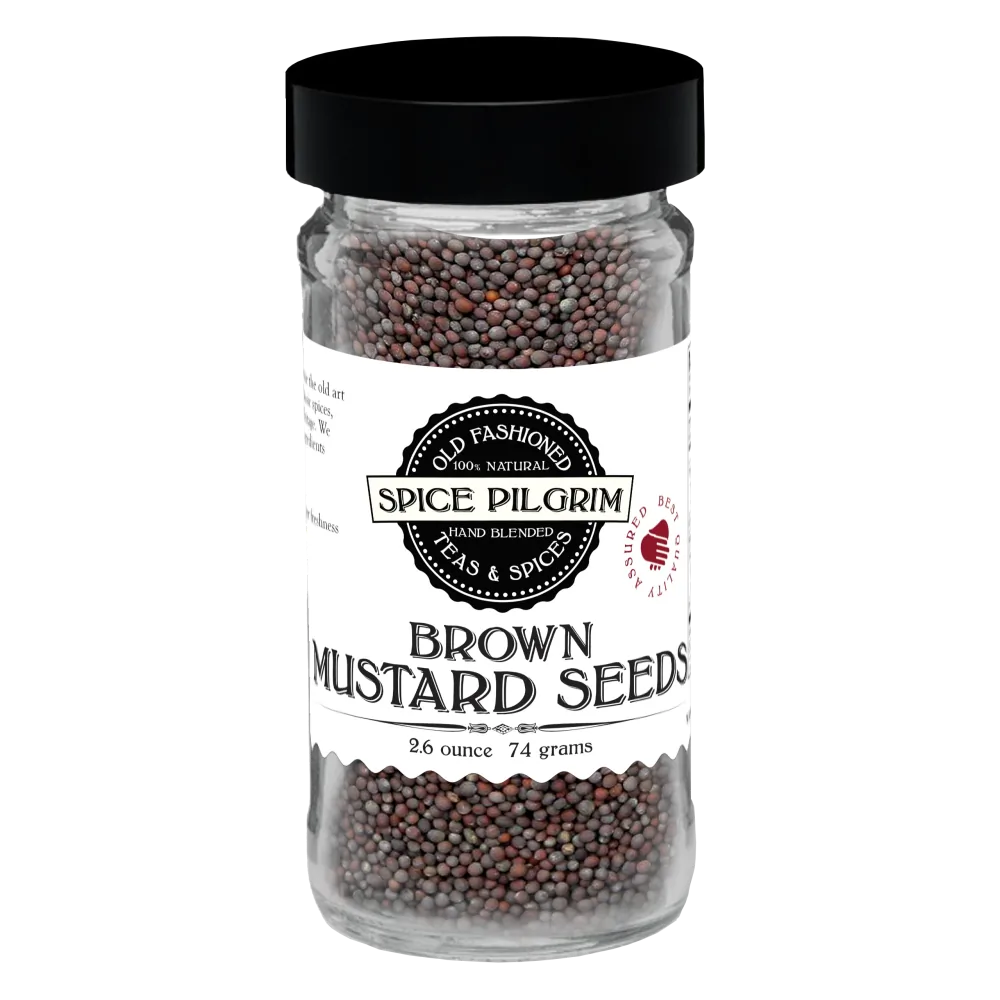
Brown Mustard Seeds
Brown Mustard Seeds
No Salt, No Sugar, No Preservatives
Couldn't load pickup availability
Reach for brown mustard seeds when you want either a warm, nutty pop in a pan of vegetables or a sharp, sinus-clearing kick in a homemade mustard. These small seeds are a workhorse in two very different kitchens: dropped into hot oil they crackle and turn sweet and nutty for South Asian dishes, and crushed cold with vinegar they bloom into a pungent, grainy mustard for the jar. They also go straight into pickling brines, where they add a clean, spicy snap.
The magic is in the chemistry, and a little know-how is all it takes. Brown seeds are sharper and more pungent than the mild yellow kind, which is exactly why curries and grainy mustards call for them. We pack whole seeds fresh, since the volatile compounds that give mustard its heat are strongest in the intact seed and you decide when to set them loose.
Whole seeds, packed fresh. No salt, sugar, or fillers.
Common Questions
How do I cook with them in Indian dishes?
How do I cook with them in Indian dishes?
This is the tempering technique called tadka. Heat oil or ghee until shimmering, add the seeds, and cover the pan, because they will pop and jump. The moment the popping slows, in just a few seconds, pour the seeds and oil over your dal, vegetables, or rice. The heat turns their raw sharpness into a warm, nutty, almost smoky flavor.
How do I keep them from burning or tasting bitter?
How do I keep them from burning or tasting bitter?
Speed and a lid. In hot oil the seeds go from perfectly toasted to burnt and bitter in seconds, so have your other ingredients ready and add them the moment the popping eases. For ground or crushed seeds in a sauce, bitterness usually means they need a little salt, sugar, or acid to balance, or simply more time to mellow.
Can I use yellow mustard seeds instead?
Can I use yellow mustard seeds instead?
Not really, if pungency is the point. Yellow seeds are much milder, so they work for pickling and mild table mustard but fall flat in spicy curries or a bold grainy mustard. Brown seeds bring the heat and depth those dishes are built around.
How do I make my own mustard, and why is it so harsh at first?
How do I make my own mustard, and why is it so harsh at first?
Soak the whole seeds in vinegar, wine, or beer, then blend to the texture you like. Freshly made mustard tastes shockingly harsh and bitter, which alarms first-timers, but that is normal: it needs a few days to a few weeks to mellow and round out. One bit of chemistry to know, cold liquid makes it hotter, warm or boiling liquid makes it milder, and adding acid locks in the heat level at that moment.
What else are they good for?
What else are they good for?
Whole brown seeds are a pickling staple, holding up in hot vinegar brines and adding a spicy snap to dill pickles, beans, and preserves. They also bring texture and bite to spice rubs and slaws.
Share
Ingredients:

Brown Mustard Seeds
$12.00