

Chervil Leaves
Chervil Leaves
Couldn't load pickup availability
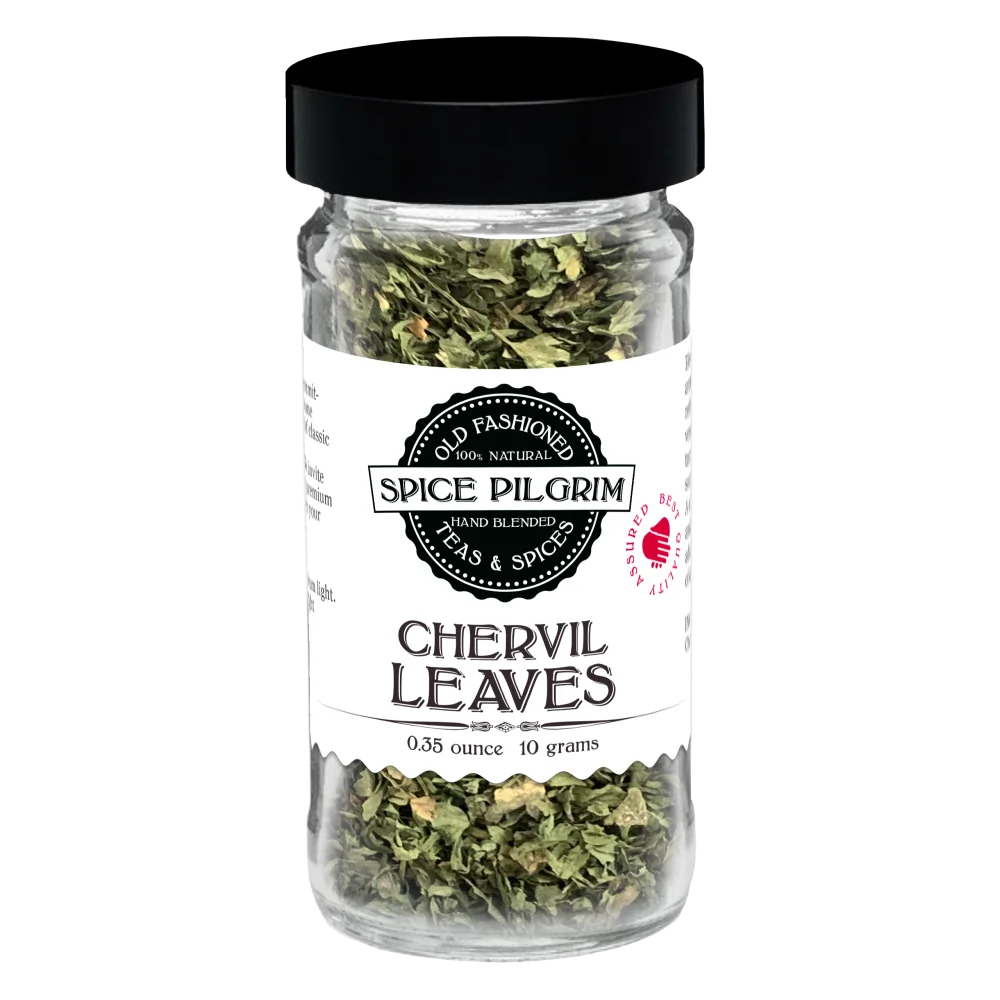
A French omelet, a delicate fish, or a butter sauce takes on a quiet elegance with chervil, that soft, sweet, faintly anise herb note woven through it. Chervil is the gentle one of the French herb world, often described as halfway between parsley and tarragon, with a light licorice whisper. It is the defining herb in classic fines herbes and the green lift in scrambled eggs, omelets, deviled eggs, beurre blanc and bearnaise, and spring vegetable dishes. Because fresh chervil is notoriously hard to find and wilts within days, dried leaf is the practical way to keep it on hand all year.
That is the real case for dried chervil: it is the secret-weapon herb most stores never carry fresh, ready whenever a recipe calls for it. The flavor lives in delicate, fast-fading oils, so we dry and cut the leaf and pack it fresh, keeping it a deep, vibrant green rather than the dull, hay-like dried chervil that has sat too long and lost its point.
Dried cut leaf, packed fresh. No salt, sugar, or fillers.
Common Questions
What does chervil taste like?
What does chervil taste like?
Delicate and sweet, like a softer parsley with a faint anise or licorice note, a touch of tarragon without tarragon's sharpness. It is subtle by nature, meant to add a fresh, refined lift rather than a bold flavor, which is exactly why classic French cooking prizes it for eggs, fish, and butter sauces.
How do I use dried chervil so it does not taste like nothing?
How do I use dried chervil so it does not taste like nothing?
Two keys. Add it a little earlier than you would fresh, so the dried leaf has a moment in the warm dish to rehydrate and release its oils, and crush it between your fingers as you add it to wake up the aroma. Stir it into eggs, sauces, or dressings near the end of cooking rather than boiling it hard, since its delicate flavor fades with long high heat.
What is in fines herbes, and is chervil really necessary?
What is in fines herbes, and is chervil really necessary?
Classic French fines herbes is a blend of chervil, parsley, chives, and tarragon, and chervil is the herb that makes it taste like fines herbes rather than just mixed parsley. It ties the others together with its sweet, anise-edged softness. Without it the blend loses its signature character, which is why dried chervil is a quiet pantry essential.
What can I substitute if a recipe calls for chervil and I have none?
What can I substitute if a recipe calls for chervil and I have none?
The closest is a mix of parsley with a small amount of tarragon or fennel frond to echo the anise note. Use a light hand with the tarragon, since it is far stronger than chervil and can take over a delicate dish. But for true fines herbes flavor, chervil itself is hard to replace.
How can I tell if dried chervil is still good?
How can I tell if dried chervil is still good?
Look at the color and smell it. Good dried chervil is a lively green and gives a soft, sweet, herbal aroma when crushed. If it has faded to a dull yellow-green or smells of nothing, the oils are gone and it will taste musty or flat. Stored airtight away from light and heat, it holds its flavor well.
Share

Chervil Leaves
$12.00