

Chili Threads
Chili Threads
Couldn't load pickup availability
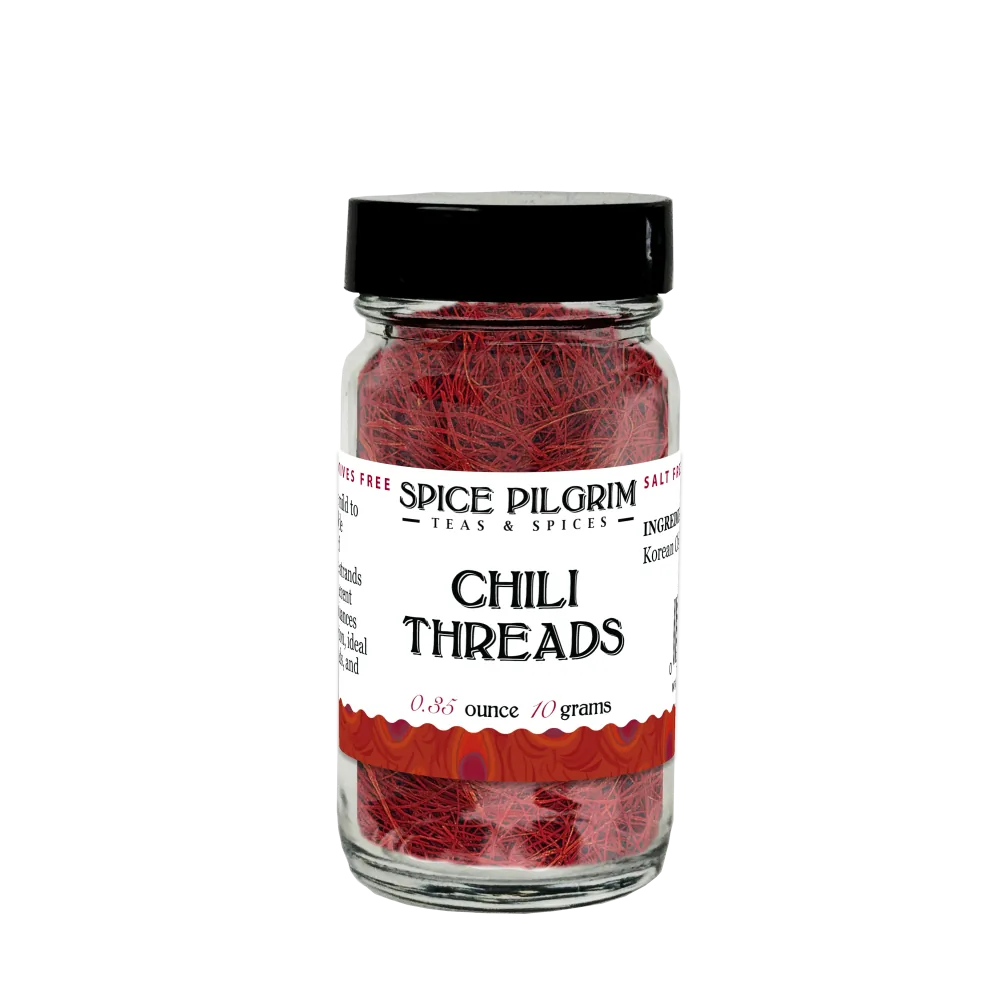
A finishing touch that looks as good as it tastes: fine, glossy strands of red chili scattered over a dish like edible silk. These Korean chili threads (called sil-gochu) are mild by design, with the seeds removed, so they bring elegant color and a gentle, sweet, faintly smoky warmth rather than real heat. Drape them over kimchi, stir-fried glass noodles, steamed eggs, rice bowls, a bowl of ramen, sushi and sashimi, or a fresh salad for an instant lift in both color and texture.
The magic is in how they behave. Dry, the threads are crisp and brittle; the moment they meet steam or a little moisture, they soften into delicate, silky strands that drape beautifully over the food. They are made from the dried walls of red chili peppers, hand-shredded fine, and we pack them so they keep their vivid crimson color rather than fading to a dull brown.
Whole dried threads, packed fresh. No salt, sugar, or fillers.
Common Questions
Are chili threads spicy?
Are chili threads spicy?
Barely. Because the seeds and the hot inner membrane are removed before the pepper walls are shredded, the threads are mild, with a gentle sweet warmth rather than a kick. They are chosen for their color, elegance, and subtle flavor, not for heat, which is why they work as a finish on delicate dishes where chili flakes would be too aggressive.
How do I use them?
How do I use them?
Treat them as a finishing garnish, added at the very end. Scatter a small pinch over a plated dish just before serving; the steam softens them into silky strands within moments. For a neater look, you can snip them shorter with scissors. A little goes a long way visually, so a small amount finishes a whole plate.
Can I cook with them, or only use them as garnish?
Can I cook with them, or only use them as garnish?
Garnish is where they shine. They are too fine to stand up to long cooking and will burn to ash or disappear if stirred into a hot pan or a long simmer. If you want them on a baked or grilled dish, add them in the last minute or two, or simply place them on after cooking.
What dishes are they traditional on?
What dishes are they traditional on?
In Korean cooking they finish white kimchi (baek-kimchi), stir-fried glass noodles (japchae), steamed eggs, and festive platters. In Japanese kitchens, where they are called ito togarashi, they top ramen, sushi, and sashimi. Beyond that they look striking on avocado toast, deviled eggs, grain bowls, soups, and salads.
How do I store them so they stay red?
How do I store them so they stay red?
Keep them in a sealed container away from light, heat, and moisture. The fine strands fade and can clump if exposed to humidity or sunlight, so a closed jar in a cool, dark spot keeps both the vivid color and the silky texture intact.
Share
Ingredients:

Chili Threads
$12.00