

Cilantro Leaves
Cilantro Leaves
No Salt, No Sugar, No Preservatives
Couldn't load pickup availability
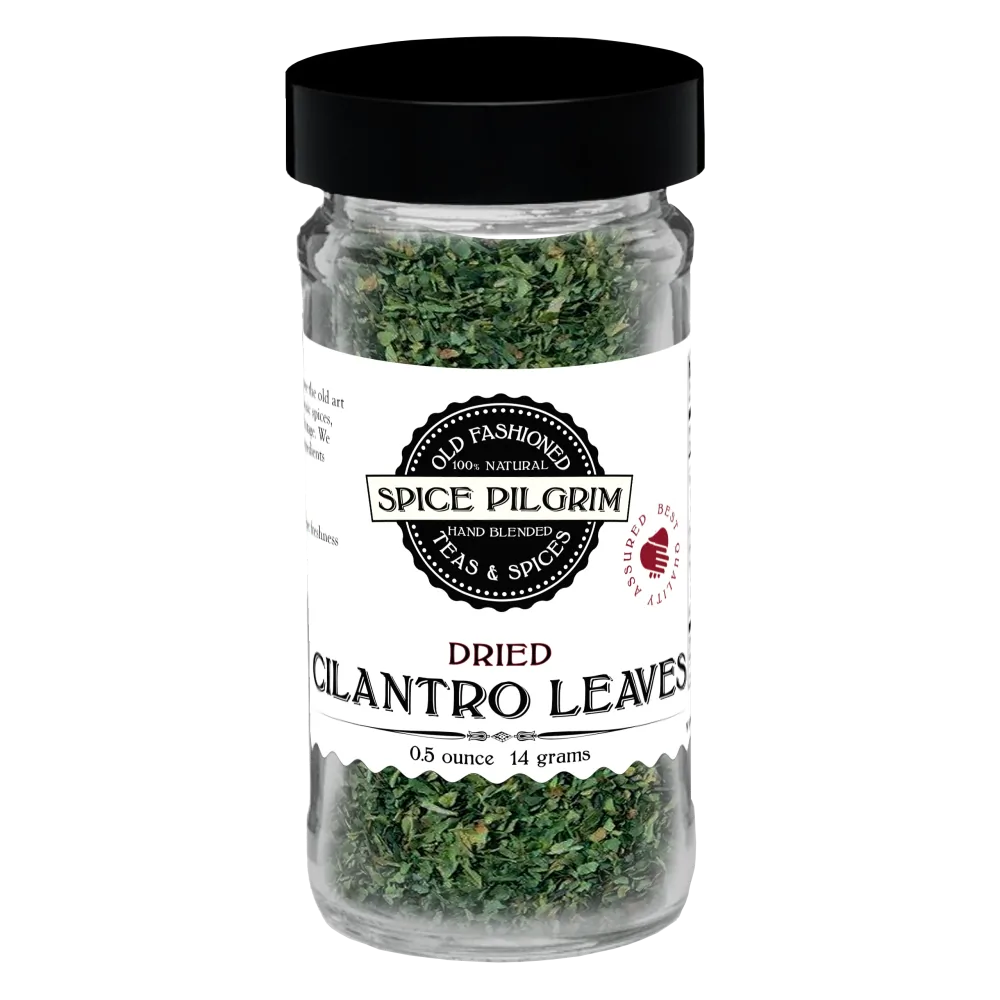
When a pot of chili, a simmered curry, or a batch of salsa needs that familiar green, citrusy cilantro note and there is no fresh bunch in the fridge, this is the pantry backup that gets you there. Dried cilantro keeps the herb on hand year-round, ready to stir into soups, stews, beans, rice, curries, and sauces, or to bloom into dips, dressings, and marinades. It is honest about what it is: a convenient dried herb for cooked dishes, not a stand-in for the bright punch of a fresh-chopped garnish.
Cilantro is the leaf of the same plant that gives us coriander seed, with a fresh, citrus-forward, green flavor that runs through Mexican, Indian, Caribbean, and Southeast Asian cooking. Dried, it is milder and gentler than fresh, so it shines stirred into a dish as it cooks rather than scattered raw on top. We pack it fresh so it keeps as much of its green, citrusy character as a dried leaf can.
Dried leaf, packed fresh. No salt, sugar, or fillers.
Common Questions
Is dried cilantro as strong as fresh?
Is dried cilantro as strong as fresh?
No, and it helps to know that going in. Cilantro's signature brightness lives in delicate oils that fade when the leaf is dried, so dried cilantro is milder and rounder, without the sharp fresh-garnish punch. That makes it best for cooked dishes where it simmers into the background; for a raw finishing garnish on tacos or pho, fresh is still the one to reach for.
Are cilantro and coriander the same thing?
Are cilantro and coriander the same thing?
Same plant, different parts. In the United States, the fresh green leaves are called cilantro and the dried seeds are called coriander; in much of the world the leaf is simply called coriander leaf. They taste quite different, though: the leaf is bright and citrusy-green, while the seed is warm, sweet, and nutty. This product is the dried leaf.
How do I get the most flavor from it?
How do I get the most flavor from it?
Rehydrate it and add it during cooking. Stir it into the dish a few minutes before the end, or soak it briefly in a little water, lime juice, or broth to soften and wake up the leaves. Crushing it between your fingers as you add it also helps release what aroma it has.
Why does cilantro taste like soap to some people?
Why does cilantro taste like soap to some people?
It is genetics, not the cilantro. A portion of people carry a variation in a smell-receptor gene that makes cilantro's aldehyde compounds register as soapy rather than citrusy. If that is you, this will not change it, though some find the milder dried form less aggressive than a pile of fresh leaves.
What dishes does it work in?
What dishes does it work in?
It is at home in cooked Mexican and Tex-Mex (chili, beans, enchilada and taco fillings, simmered salsas), Indian and Southeast Asian curries and dals, Caribbean stews, and spice rubs and marinades. Use it where the cilantro flavor cooks into the dish rather than as the fresh green confetti on top.
Share
Ingredients:

Cilantro Leaves
$12.00