

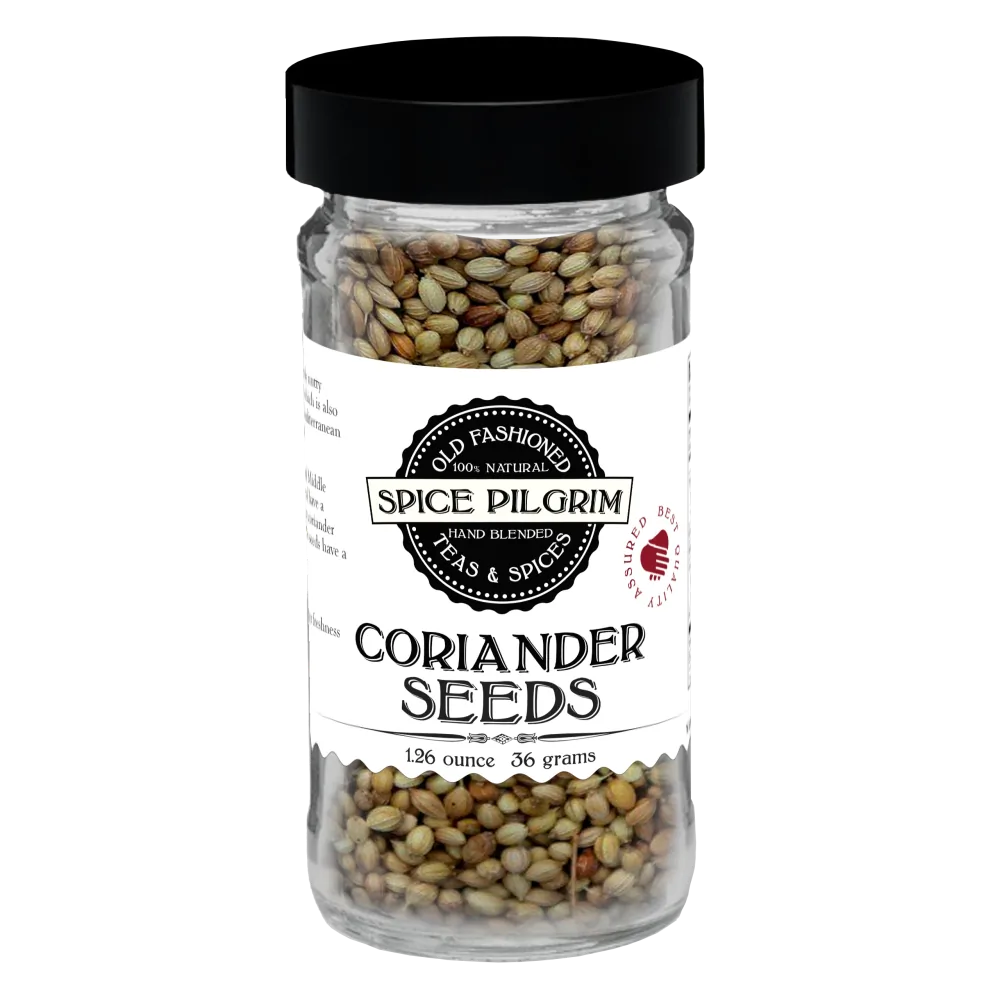
Coriander Seeds
Coriander Seeds
No Salt, No Sugar, No Preservatives
Couldn't load pickup availability
Warm, sweet, and gently citrusy, coriander is the quiet workhorse behind a huge swath of the world's cooking, the mellow, rounding spice in curry powders, garam masala, and Middle Eastern blends that ties sharper spices together. Whole seeds give you the most flavor and the most control: toast them in a dry pan until they smell nutty and start to pop, then grind them fresh for curries and rubs, or drop them whole into pickling brines, braises, and stocks. They are also a classic in slow-cooked beans and stews, and the botanical behind many gins and Belgian-style wheat beers.
Buying coriander whole is the freshness play: the seeds hold their fragrant oils far longer than pre-ground does, so toasting and grinding them yourself, even minutes before cooking, gives a brighter, sweeter, more citrusy result than any jar of old powder. We pack the whole seeds fresh so that potential is intact when you open the tin.
Whole seeds, packed fresh. No salt, sugar, or fillers.
Common Questions
Should I toast them, and how?
Should I toast them, and how?
Yes, toasting is where coriander comes alive. Warm the whole seeds in a dry pan over medium heat, shaking often, until they smell nutty and fragrant and you hear them start to pop, usually a minute or two. Pull them off the heat right away: take them too far and the delicate sweet-citrus oils burn off and turn bitter. Cool briefly, then grind.
What does coriander taste like?
What does coriander taste like?
Warm, sweet, and citrusy, with a soft floral, almost lemony note and a gentle nuttiness once toasted. It is mild and rounding rather than sharp, which is why it works as a base spice that harmonizes bolder flavors. It pairs especially well with cumin and with ginger.
Is this the same as cilantro?
Is this the same as cilantro?
Same plant, different part. These dried seeds are coriander; the fresh green leaves of the same plant are cilantro (called coriander leaf in much of the world). They taste nothing alike: the seed is warm, sweet, and nutty, while the leaf is bright and grassy-citrusy. Toasting and grinding releases the seed's character.
When should I use whole seeds instead of ground?
When should I use whole seeds instead of ground?
Reach for whole seeds when you want to toast and grind to order for the freshest flavor, or when a dish benefits from whole spice: pickling brines, slow braises, stocks, and stews where the seeds release flavor slowly over time. If you would rather skip the toasting and grinding step, our coriander also comes ready stone-ground.
What dishes rely on it?
What dishes rely on it?
It is foundational across the globe: the sweet base note of Indian garam masala and curry powders, a partner to cumin in Middle Eastern baharat and North African blends, and a seasoning for roasted vegetables, sausages, and braised meats. Whole seeds are also essential in pickling spice and in many gins and witbiers.
Share
Ingredients:

Coriander Seeds
$12.00