


Creole Seasoning
Creole Seasoning
Couldn't load pickup availability
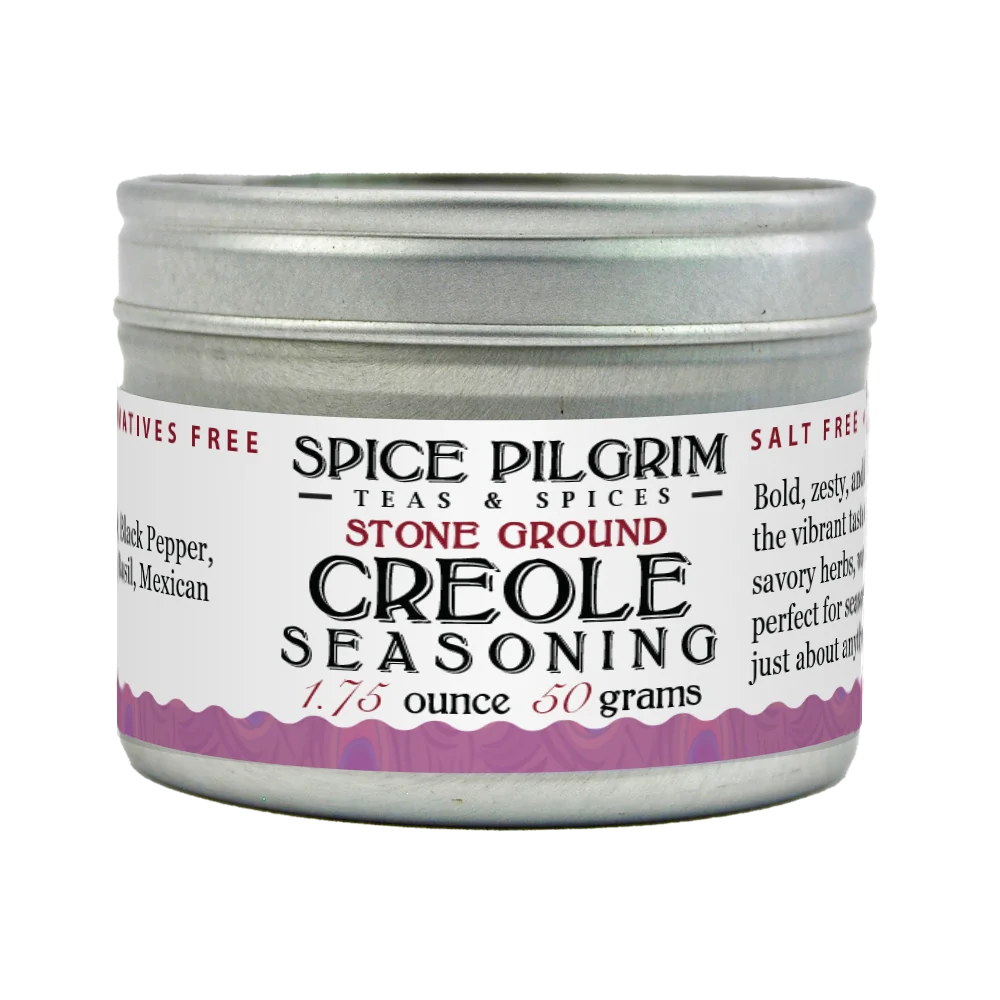
The layered, herb-forward seasoning that tastes of a New Orleans kitchen: paprika and herbs over a deep savory base, built to make gumbo, jambalaya, etouffee, and blackened-style fish and chicken taste like the real thing. Where a rustic Cajun blend leads with pepper heat, Creole is the more refined, aromatic cousin, rounded out with sweet basil, thyme, Mexican oregano, and celery seed for a fuller, more complex flavor. Shake it onto shrimp, chicken, and fish before searing, stir it into rice and bean dishes, season soups, stews, and tomato sauces, or dust it over roasted potatoes and vegetables.
Two things make ours different. It is completely salt-free, so you control the seasoning and the herbs and peppers come through clearly instead of being buried under sodium. And its heat is layered rather than blunt: sharp white pepper hits up front while smoother Tellicherry black pepper brings a warm, citrusy-woody depth behind it. We stone-grind the whole spices fresh so the blend smells alive when you open it.
Stone-ground, salt-free, packed fresh. No salt, sugar, or fillers.
Common Questions
What is the difference between Creole and Cajun seasoning?
What is the difference between Creole and Cajun seasoning?
They come from two different Louisiana traditions. Cajun seasoning grew out of rural, country cooking and is pepper-forward and rustic, leaning on black pepper, white pepper, and cayenne for direct heat. Creole reflects the city kitchens of New Orleans and is more refined and herb-forward, adding sweet basil, thyme, oregano, and celery seed for an aromatic, layered flavor. This is the Creole style: complex and herbal, with heat that supports the herbs rather than dominating.
How hot is it?
How hot is it?
Moderate and warming, not fiery. The heat comes from a layered combination of white and Tellicherry black pepper rather than heavy cayenne, so it builds gently and stays in balance with the herbs. It seasons food with depth and warmth, and you can always add cayenne or hot sauce at the table if you want more punch.
Since it is salt-free, how do I season with it?
Since it is salt-free, how do I season with it?
Salt separately, to taste. Use this blend generously for its herb-and-pepper flavor, then add salt to the dish as you normally would, which keeps the seasoning level fully in your hands. That is especially useful in Creole cooking, where dishes like gumbo and jambalaya already get salt from stock, sausage, and seafood.
What is Mexican oregano doing in here?
What is Mexican oregano doing in here?
It is a different plant from the Mediterranean oregano on most pizza, with brighter citrus and faint anise notes and excellent staying power through long braises and high-heat searing. In a Creole blend it adds a distinctive, slightly citrusy herbal lift that ordinary oregano does not, and it holds up in a long-simmered gumbo without turning dusty or bitter.
What should I cook with it?
What should I cook with it?
It is built for Louisiana classics: gumbo, jambalaya, etouffee, red beans and rice, and seared or blackened shrimp, chicken, and fish. Beyond that it is excellent in tomato sauces and soups, on roasted potatoes and vegetables, in a pot of beans, or as an all-purpose savory-herb seasoning anywhere you want New Orleans character without salt.
Share

Ingredients:

Creole Seasoning
$12.00